Posted in Bible study, Devotion, From the Insideout, Journey Through The Word, Quiet Time, She, Volume 4

Sarah’s Visit from the LORD

adapted from She, delighting in the examples of the women of the Bible, Volume 4/pp69-70

Today’s Scripture: Genesis 18 and 21:1-3; Isaiah 64:4; Psalm 56:3

For since the world began, no ear has heard and no eye has seen a God like you, who works for those who wait for him! Isaiah 64:4 NLT

Genesis 18 is filled with details that are helpful, if not necessary, for understanding and truly appreciating this part of Sarah’s story and the blessing that she and Abraham experience.

Bibleref.com sums the first portion up like this: “The events of Genesis 18 take place not long after God’s visit with Abraham in chapter 17. However, this visit from the Lord is quite different. It’s not clear, at first, if Abraham even recognizes the three men who appear outside of his tent as the Lord and two angels in human form. In either case, Abraham runs to show them deep respect and hospitality. He tells Sarah to bake them bread and has a young calf slaughtered for them to eat as they rest in the heat of the day.

Once the meal is over, the Lord fully reveals Himself, in a conversation He conducts with Sarah through Abraham while she remains hidden and listening in the tent. First, the Lord asks where Sarah is and then reveals to her what He had said to Abraham in the previous chapter: by this time a year from now, she will have a son.

by this time a year from now Sarah will have a son.

Genesis 18:10

Part of the story hasn’t changed, Sarah is still barren and advanced in age…but now she knows her waiting is about to come to an end. As we read in Genesis 21:1, the Lord keeps His promise – regardless of how difficult a thing may seem in human eyes or understanding – nothing is too difficult for our God! We are not told exactly how the promise comes about – only that “the Lord visited Sarah as He had said, and the Lord did unto Sara as He had spoken. For Sarah conceived, and bare Abraham a son in his old age, at the set time of which God had spoken to him. And Abraham called the name of his son that was born unto him, whom Sarah bare to him, Isaac” (Genesis 21:1-3).

How would you say you wait? Patiently…Impatiently…Excitedly…Nervously…Doubtfully…? I would venture to say that for most – if not all of us, it depends on what we’re waiting for. My four-year-old grandson is working on waiting patiently to have our attention if we are already talking to someone else. Sometimes he waits really well, but if what he wants to say is super exciting or important, the wait becomes nearly impossible for him. Sometimes I wait well, but waiting on a doctor’s report or a job position may turn into waiting nervously, waiting on my smoothie at McDonald’s when I’m running late for work may stir up the impatient side of me, and the eight years of waiting on a baby ran the gamut from waiting patiently to impatiently to excitedly and nervously and eventually doubtfully. The fact of the matter is, waiting is generally not easy, so when you’re talking 25 years of waiting, which is approximately the amount of time that Sarah and Abraham waited on the promise God had made concerning Sarah having a child, specifically a male child who would be the first seed of the great nation God had told Abraham he would one day father.

As we have seen through our journey with Sarah, it wasn’t an easy wait for her, and subsequently not an easy wait for Abraham either. However, “the longer she waited, the more of a miracle her situation became.” Why? Because the older she and Abraham became, the possibility of conceiving and giving birth, humanly speaking, diminished. Sarah understood this, which is why she laughed at the very thought of it being true – it is also why God’s rebuttal to her laughter was a question: “Is anything too hard for the LORD?” (Genesis 18:14). It was a pointed reminder then and remains so today, that nothing, absolutely nothing, can limit or hold back the power of God.

“Waiting sometimes causes us to fear the unknown. However, there is no need to fear when we trust in Him.”

She, study guide, volume 4, p70

Friends, I don’t know if waiting ever becomes easy. However, I have found that the more life has required me to wait, the more God has strengthened/deepened my roots of faith. Waiting teaches us to depend on God, to look to Him for help when we grow weary and/impatient, to confess our weariness and trust Him even in the midst of humanly impossible situations that raise shadows of doubts. … Yes, as today’s journal entry states: “Waiting sometimes causes us to fear the unknown. However, there is no need to fear when we trust in Him.1

The More We Know

The Wait for Isaac

Genesis 12 begins the story of Abraham (then called Abram) and his barren wife, Sarah. Verses 1 through 4 record God’s first words to him about a homeland for his offspring. Even though the gift of a son is not directly mentioned in this first communication, God hinted at His plan for Abram. Abraham was 75 years old when he first received the promise, and Genesis 21:5 tells us he was 100 years old when Isaac was born. Sarah was 90. So Abraham and Sarah waited 25 years for the fulfillment of God’s promise.

In those 25 years between the time that Abram was promised a son and the birth of Isaac, Abram and Sarah had certain ideas of how they might facilitate the keeping of the promise. One was that Abraham’s steward, Eliezer, would become the heir of Abraham’s household (Genesis 15:2–3). Another idea was that Abraham could have an heir through a son conceived by Sarah’s slave, Hagar (Genesis 16:1–2). In both cases, God rejected those men as Abraham’s heirs, pointing Abraham and Sarah to a literal, miraculous fulfillment of the promise.2
  1. She, study guide, volume 4, p70 ↩︎
  2. Gotquestions.org ↩︎
Posted in Bible study, Devotion, From the Insideout, God is good, Journey Through The Word, prayer, Quiet Time, She, Volume 4

Sarah~ [Sarai], part 2… and Hagar

adapted from the study She, delighting in the examples of the women of the Bible, volume 4/pp63-64

Today’s Scripture Reading: Genesis 16 and Isaiah 55:8-9

In our last encounter with Sarah, we learned that she was married to Abraham, and she left her family and a life she had known for more than 50 years to follow Abraham to a land God said He would show them. She has heard God’s promise to Abraham of many descendants that would make up a great nation. Yet, four chapters later, Scripture still reports that she has no children.

Sarah was considered barren, Yet she knew what God had promised.

She, Delighting in the examples of the women of the Bible, Volume 4, p65

The journal for this study poses the question, “Why had she not gotten pregnant yet?” This made me think of others we’ve met on our journeys, like Hannah (1 Samuel 1:5) and Rachel (Genesis 30:22), both of whom are reminders of the fact that it is God who opens the womb and/or keeps it closed. The journal also reminds us that “she was getting up in years, and it seemed as if time was short.” This truth is made evident in today’s journey through Genesis 16, where we find that Sarah decides not to wait any longer; she devises a plan and takes the necessary steps to carry it out. The plan involved her Egyptian handmaid, Hagar, and the very desperate act of having her sleep with Abraham. (Yes, this was a cultural norm at the time, but I can only imagine how desperate you must be for a child to consider, let alone actually, employing it.) I would like to say that I have never been one to manipulate situations for a certain outcome, but sadly, I played those games for years when I was younger, and I learned, just like Sarah, that manipulation comes with regret and consequences that are often more difficult and disappointing than waiting for God and His timing.

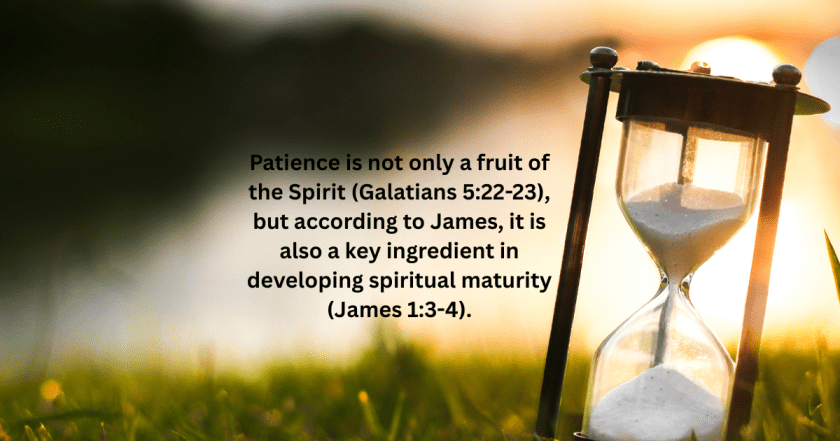
Friends, we must never forget that patience is a highly esteemed virtue in the Bible, often described as “long-suffering” or “endurance”. It is not passive waiting, but an active, steadfast trust in God’s timing and loving treatment of others. Patience is not only a fruit of the Spirit (Galatians 5:22-23), but according to James, it is also a key ingredient in developing spiritual maturity (James 1:3-4).

We would be wise to remember that our God, the same God of Abraham and Sarah, is a sovereign God, a keeper of promises, and His timing is always perfect. Apparently, though, the years of waiting have made her question, if not flat-out disbelieve, that she would ever get pregnant. Unlike God, she had a plan B and set it in motion through a conversation with Abraham, explaining her plan. She then takes Hagar and gives her to Abram as a ‘surrogate’ wife. Can you even imagine what a desperate desire Sarah had for a child, to the point that this became her solution?

A Plan Gone Wrong

So Sarai said to Abram, “The Lord has prevented me from having children. Go and sleep with my servant. Perhaps I can have children through her.” And Abram agreed with Sarai’s proposal. So Sarai, Abram’s wife, took Hagar the Egyptian servant and gave her to Abram as a wife. (This happened ten years after Abram had settled in the land of Canaan.) So Abram had sexual relations with Hagar, and she became pregnant. But when Hagar knew she was pregnant, she began to treat her mistress, Sarai, with contempt.

Genesis 16:2-4

The plan accomplishes Sarah’s desire for a child, but it backfires in every other way. Her husband was now the husband of Hagar, her handmaid, who was now pregnant with his child. On top of that, Hagar now despises Sarah and treats her with contempt, and in turn, Scripture says that Sarah treated Hagar harshly, and Hagar fled from Sarah’s presence.” (Genesis 16:6, CSB)

The More We Know

I hope you will take time to learn more about Hagar from this commentary, borrowed from Gotquestions.org.

Posted in Bible study, Devotion, From the Insideout, Journey Through The Word, Quiet Time, She, Volume 3

Mary, Mother of Jesus, part 4

Adapted from She, delighting in the women of the Bible, volume 3, pp 35-36

Today’s Scripture: Luke 2:1-6, Hebrews 11:6, Philippians 1:6 and Proverbs 16:9

We can make our plans,but the Lord determines our steps.

Proverbs 16:9 NLT

God’s Sovereign Plan

Pregnancy in the 21st century is far different than in the days when Mary was pregnant. Although the duration of a normal pregnancy remains nine months, there have been many advancements in modern medicine. Parents not only have the option of ultrasounds that reveal their baby’s gender, but also 3D imaging, which allows them to see what their baby will look like, and anatomy scans, which reveal the baby’s overall health and development. Then there’s the decision of where the baby will be born. In the days of Jesus, I suppose home births would have been the typical option, and while they remain an option, there are also hospitals and spa-like birthing centers to pick from. Along with these choices, there’s the how, including natural, medicated, and C-sections. Then there’s the when option, yes, some doctors allow you to pick the date of your child’s birth, working it around jobs or other life events that you may not want the birth to interfere with. In the days of Joseph and Mary, the option would have simply been a “home birth, which would have meant Galilee, where Joseph lived. However, in God’s sovereign plan, Caesar Augustus issued a decree requiring all to pay taxes. So, because Joseph was from the lineage of David, he and Mary (who was “great with child”) had to return to Bethlehem, the city of David, in order to be taxed. While they were there, Scripture records that “the days were accomplished that she should be delivered, (Luke 2:6). So, just as the prophet had declared, the long-awaited Messiah would be born in Bethlehem.

Reflection and Application

How has the Lord directed your steps before?

The More We Know

As with any government count, this census was meant to calculate taxes and military resources. Mary’s soon-to-be husband, Joseph, is a descendant of David, so they go to Bethlehem to participate (Luke 2:1–5).

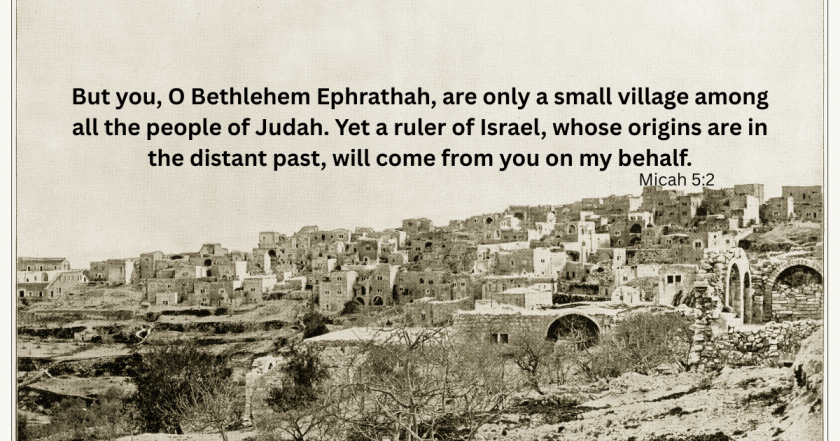
It would have been unusual for an unmarried couple to travel together, but the circumstances of Mary’s pregnancy are hardly normal (Luke 1:34–35). The family likely realized it would be better for her to be with Joseph when she gave birth. That Mary is in Bethlehem when Jesus is born corresponds to Messianic prophecy (Micah 5:2). (gotquestions.org)

  1. She, delighting in the examples of the women of the Bible, volume 3, p36 ↩︎

Posted in Bible study, Devotion, From the Insideout, God is good, Journey Through The Word, She, Volume 3

Elizabeth

adapted from the She study, volume 3, pp11-12

Elizabeth is a well-known woman of the Bible. She is a beautiful example of faith and of the fullness of joy in the presence of the Lord. We find her story in Luke, chapter 1, verses 5-80, where we learn that she was the wife of Zachariah, the prophet, and she was very old when she conceived. She was also the cousin of Mary, the mother of Jesus. It is this part of her story that we will focus on today.

Not long after Mary learned that she was pregnant with Jesus, the Son of God, she traveled to visit her cousin Elizabeth in Judea. Let’s stop and marvel for a minute at the contrast of the miracles God had worked in both women. Mary, a young, unmarried virgin, has just learned that she has become pregnant through immaculate conception, while Elizabeth, who was described as ‘barren and very old’ in Luke 1:7, is now six months pregnant. I can’t help but notice how their stories accentuate the beautiful truth that: “Nothing is impossible with God” (Luke 1:37).

35 The angel replied, “The Holy Spirit will come upon you, and the power of the Most High will overshadow you. So the baby to be born will be holy, and he will be called the Son of God. 36 What’s more, your relative Elizabeth has become pregnant in her old age! People used to say she was barren, but she has conceived a son and is now in her sixth month. 

Luke 1:35-36

While I love the entire story of Elizabeth and Mary, I particularly appreciate the beauty of Elizabeth and her baby when Mary arrived.

39 A few days later Mary hurried to the hill country of Judea, to the town 40 where Zechariah lived. She entered the house and greeted Elizabeth. 41 At the sound of Mary’s greeting, Elizabeth’s child leaped within her, and Elizabeth was filled with the Holy Spirit.
42 Elizabeth gave a glad cry and exclaimed to Mary, “God has blessed you above all women, and your child is blessed. 43 Why am I so honored, that the mother of my Lord should visit me? 44 When I heard your greeting, the baby in my womb jumped for joy. 45 You are blessed because you believed that the Lord would do what he said.”

Luke 1:39-45

Elizabeth was clearly overwhelmed at Mary’s arrival, but it was more than excitement to see Mary. Scripture says that it was because “at the sound of Mary’s greeting, Elizabeth’s baby leaped within her, and Elizabeth was filled with the Holy Spirit.” This was evident by Elizabeth’s “glad cry and exclamation to Mary,” that “God has blessed you above all women, and your child is blessed.” Elizabeth goes on to question why she is so honored to be visited by the “mother of her Lord.” What a moving and beautiful example of how the joy we find in the presence of the Lord our God affects those around us.

Experience and Application

Friends, I know that I share (or perhaps overshare) various stories of how God has worked in my life – so forgive me if you have heard this too many times. However, I cannot read this story without remembering my own experience with being unable to conceive for eight long and often torturous years. While I realize this in no way compares to the number of years that Elizabeth waited, it did offer me a similar experience as God restored a joy that had long been stifled by life’s sorrows and disappointments. For it was during my pregnancy and the birth of my first daughter that God sent several “Elizabeth’s” to me who poured out encouragement and joy by feeding my soul and mind with the Word that I had somewhat tuned out for years because of my disappointment in myself and in God. The pregnancy itself brought a sense of joy because I had hoped so long for it, but through the joy of godly friendships, He began doing the work of changing me from the Insideout and when that baby girl was born and they held her up to me – I knew my life would never be the same … not only because I had been blessed with a child but because I was filled with an awareness of His Presence in me.

“May we all seek to be an Elizabeth to someone else.”

She, Volume 3, p12

The More We Know

  • Who is an Elizabeth in your life?
  • Who was Elizabeth’s Son?