Posted in Bible study, Devotion, From the Insideout, Journey Through The Word, Quiet Time, She, Volume 4

Sarah’s Visit from the LORD

adapted from She, delighting in the examples of the women of the Bible, Volume 4/pp69-70

Today’s Scripture: Genesis 18 and 21:1-3; Isaiah 64:4; Psalm 56:3

For since the world began, no ear has heard and no eye has seen a God like you, who works for those who wait for him! Isaiah 64:4 NLT

Genesis 18 is filled with details that are helpful, if not necessary, for understanding and truly appreciating this part of Sarah’s story and the blessing that she and Abraham experience.

Bibleref.com sums the first portion up like this: “The events of Genesis 18 take place not long after God’s visit with Abraham in chapter 17. However, this visit from the Lord is quite different. It’s not clear, at first, if Abraham even recognizes the three men who appear outside of his tent as the Lord and two angels in human form. In either case, Abraham runs to show them deep respect and hospitality. He tells Sarah to bake them bread and has a young calf slaughtered for them to eat as they rest in the heat of the day.

Once the meal is over, the Lord fully reveals Himself, in a conversation He conducts with Sarah through Abraham while she remains hidden and listening in the tent. First, the Lord asks where Sarah is and then reveals to her what He had said to Abraham in the previous chapter: by this time a year from now, she will have a son.

by this time a year from now Sarah will have a son.

Genesis 18:10

Part of the story hasn’t changed, Sarah is still barren and advanced in age…but now she knows her waiting is about to come to an end. As we read in Genesis 21:1, the Lord keeps His promise – regardless of how difficult a thing may seem in human eyes or understanding – nothing is too difficult for our God! We are not told exactly how the promise comes about – only that “the Lord visited Sarah as He had said, and the Lord did unto Sara as He had spoken. For Sarah conceived, and bare Abraham a son in his old age, at the set time of which God had spoken to him. And Abraham called the name of his son that was born unto him, whom Sarah bare to him, Isaac” (Genesis 21:1-3).

How would you say you wait? Patiently…Impatiently…Excitedly…Nervously…Doubtfully…? I would venture to say that for most – if not all of us, it depends on what we’re waiting for. My four-year-old grandson is working on waiting patiently to have our attention if we are already talking to someone else. Sometimes he waits really well, but if what he wants to say is super exciting or important, the wait becomes nearly impossible for him. Sometimes I wait well, but waiting on a doctor’s report or a job position may turn into waiting nervously, waiting on my smoothie at McDonald’s when I’m running late for work may stir up the impatient side of me, and the eight years of waiting on a baby ran the gamut from waiting patiently to impatiently to excitedly and nervously and eventually doubtfully. The fact of the matter is, waiting is generally not easy, so when you’re talking 25 years of waiting, which is approximately the amount of time that Sarah and Abraham waited on the promise God had made concerning Sarah having a child, specifically a male child who would be the first seed of the great nation God had told Abraham he would one day father.

As we have seen through our journey with Sarah, it wasn’t an easy wait for her, and subsequently not an easy wait for Abraham either. However, “the longer she waited, the more of a miracle her situation became.” Why? Because the older she and Abraham became, the possibility of conceiving and giving birth, humanly speaking, diminished. Sarah understood this, which is why she laughed at the very thought of it being true – it is also why God’s rebuttal to her laughter was a question: “Is anything too hard for the LORD?” (Genesis 18:14). It was a pointed reminder then and remains so today, that nothing, absolutely nothing, can limit or hold back the power of God.

“Waiting sometimes causes us to fear the unknown. However, there is no need to fear when we trust in Him.”

She, study guide, volume 4, p70

Friends, I don’t know if waiting ever becomes easy. However, I have found that the more life has required me to wait, the more God has strengthened/deepened my roots of faith. Waiting teaches us to depend on God, to look to Him for help when we grow weary and/impatient, to confess our weariness and trust Him even in the midst of humanly impossible situations that raise shadows of doubts. … Yes, as today’s journal entry states: “Waiting sometimes causes us to fear the unknown. However, there is no need to fear when we trust in Him.1

The More We Know

The Wait for Isaac

Genesis 12 begins the story of Abraham (then called Abram) and his barren wife, Sarah. Verses 1 through 4 record God’s first words to him about a homeland for his offspring. Even though the gift of a son is not directly mentioned in this first communication, God hinted at His plan for Abram. Abraham was 75 years old when he first received the promise, and Genesis 21:5 tells us he was 100 years old when Isaac was born. Sarah was 90. So Abraham and Sarah waited 25 years for the fulfillment of God’s promise.

In those 25 years between the time that Abram was promised a son and the birth of Isaac, Abram and Sarah had certain ideas of how they might facilitate the keeping of the promise. One was that Abraham’s steward, Eliezer, would become the heir of Abraham’s household (Genesis 15:2–3). Another idea was that Abraham could have an heir through a son conceived by Sarah’s slave, Hagar (Genesis 16:1–2). In both cases, God rejected those men as Abraham’s heirs, pointing Abraham and Sarah to a literal, miraculous fulfillment of the promise.2

  1. She, study guide, volume 4, p70 ↩︎
  2. Gotquestions.org ↩︎
Posted in Bible study, Devotion, From the Insideout, God is good, Journey Through The Word, prayer, Quiet Time, She, Volume 4

Sarah~ [Sarai], part 2… and Hagar

adapted from the study She, delighting in the examples of the women of the Bible, volume 4/pp63-64

Today’s Scripture Reading: Genesis 16 and Isaiah 55:8-9

In our last encounter with Sarah, we learned that she was married to Abraham, and she left her family and a life she had known for more than 50 years to follow Abraham to a land God said He would show them. She has heard God’s promise to Abraham of many descendants that would make up a great nation. Yet, four chapters later, Scripture still reports that she has no children.

Sarah was considered barren, Yet she knew what God had promised.

She, Delighting in the examples of the women of the Bible, Volume 4, p65

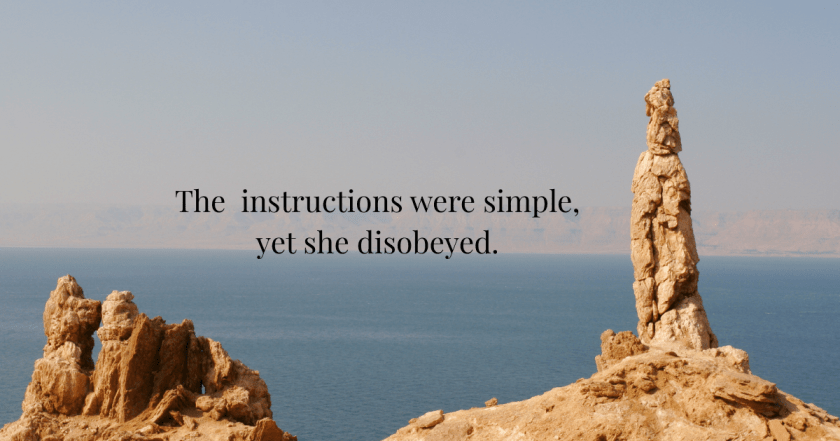
The journal for this study poses the question, “Why had she not gotten pregnant yet?” This made me think of others we’ve met on our journeys, like Hannah (1 Samuel 1:5) and Rachel (Genesis 30:22), both of whom are reminders of the fact that it is God who opens the womb and/or keeps it closed. The journal also reminds us that “she was getting up in years, and it seemed as if time was short.” This truth is made evident in today’s journey through Genesis 16, where we find that Sarah decides not to wait any longer; she devises a plan and takes the necessary steps to carry it out. The plan involved her Egyptian handmaid, Hagar, and the very desperate act of having her sleep with Abraham. (Yes, this was a cultural norm at the time, but I can only imagine how desperate you must be for a child to consider, let alone actually, employing it.) I would like to say that I have never been one to manipulate situations for a certain outcome, but sadly, I played those games for years when I was younger, and I learned, just like Sarah, that manipulation comes with regret and consequences that are often more difficult and disappointing than waiting for God and His timing.

Friends, we must never forget that patience is a highly esteemed virtue in the Bible, often described as “long-suffering” or “endurance”. It is not passive waiting, but an active, steadfast trust in God’s timing and loving treatment of others. Patience is not only a fruit of the Spirit (Galatians 5:22-23), but according to James, it is also a key ingredient in developing spiritual maturity (James 1:3-4).

We would be wise to remember that our God, the same God of Abraham and Sarah, is a sovereign God, a keeper of promises, and His timing is always perfect. Apparently, though, the years of waiting have made her question, if not flat-out disbelieve, that she would ever get pregnant. Unlike God, she had a plan B and set it in motion through a conversation with Abraham, explaining her plan. She then takes Hagar and gives her to Abram as a ‘surrogate’ wife. Can you even imagine what a desperate desire Sarah had for a child, to the point that this became her solution?

A Plan Gone Wrong

So Sarai said to Abram, “The Lord has prevented me from having children. Go and sleep with my servant. Perhaps I can have children through her.” And Abram agreed with Sarai’s proposal. So Sarai, Abram’s wife, took Hagar the Egyptian servant and gave her to Abram as a wife. (This happened ten years after Abram had settled in the land of Canaan.) So Abram had sexual relations with Hagar, and she became pregnant. But when Hagar knew she was pregnant, she began to treat her mistress, Sarai, with contempt.

Genesis 16:2-4

The plan accomplishes Sarah’s desire for a child, but it backfires in every other way. Her husband was now the husband of Hagar, her handmaid, who was now pregnant with his child. On top of that, Hagar now despises Sarah and treats her with contempt, and in turn, Scripture says that Sarah treated Hagar harshly, and Hagar fled from Sarah’s presence.” (Genesis 16:6, CSB)

The More We Know

I hope you will take time to learn more about Hagar from this commentary, borrowed from Gotquestions.org.

Posted in Bible study, Devotion, From the Insideout, Journey Through The Word, LGG Study, Quiet Time, She, Volume 4

Sarah~[Sarai], part 1

adapted from the study She, delighting in the examples of the women of the Bible, volume 4/pp63-64

Today’s Scripture Reading: Genesis 11:27-32, Genesis 12, and Genesis 18:14

God was repositioning Abraham and Sarah according to His perfect plan and they followed where He led.

Me~ from the InsideOut🦋

When we first read of Abraham and Sarah, they are living with Abraham’s family in Ur of the Chaldeans, but they moved away from there, intending to move to the land of Canaan. However, Terah, Abraham’s father, settled the family in Haran. Abraham and Sarah stayed with his family until God spoke to Abraham, telling him to move out of the country, away from his father’s family. While this move requried blind faith (for God simply said, move to a land that I will show you), it came with an amazing promise of blessing, which included him being made into a great nation, fame, God’s protection, and becoming a blessing to others. God was repositioning Abraham and Sarah according to His perfect plan and they followed where He led. Keep in mind that Abraham was at 75 years old when God called him out of Haran. Yet, Scripture doesn’t tell us that Abraham struggled with this call on his life. He and Sarah had made a home in Haran for at least 50 years. It was where their family was, but we read of no debate or conversation between Abraham and Sarah about whether to go or stay – only that Abraham (still called Abram at the time) departed as the Lord had instructed.

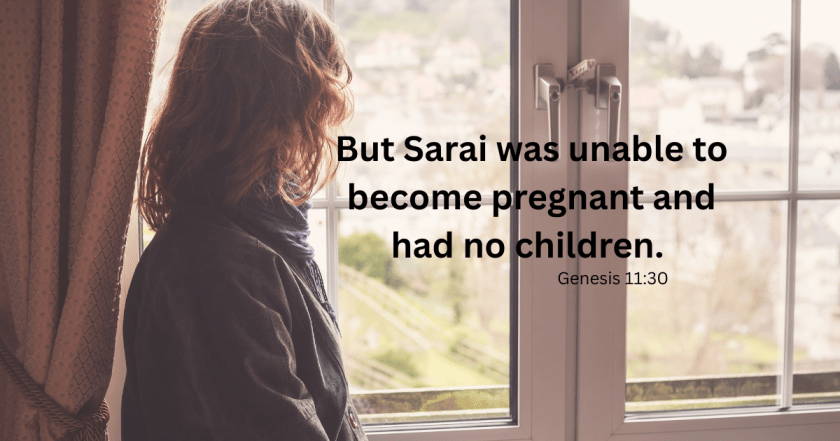
If you’re reading this account of Abraham and Sarah for the first time, or if you’ve read it more than a dozen times yet find yourself amazed yet again at God’s timing in the things He discloses before they even happen, you may be wondering how the promise of making Abraham into a great nation and giving land to his “descendants” could ever happen, especially since Sarah was barren, (Genesis 11:30) … but rest assured friends, it happens just as God said it would. Join me tomorrow and in the week ahead as we explore Sarah’s story, which includes her handmaid named Hagar, Sarah’s plan to have a baby despite being barren. and God asking Abraham the questions: “Why did Sarah laugh? Why did she say, ‘Can an old woman like me have a baby?’ 14 ‘Is anything too hard for the Lord?’ I will return about this time next year, and Sarah will have a son.”

A Prayer of Response

O Sovereign Lord, may we never doubt what You have said, but instead always stand amazed at the reality we see time and time again in Your Word, that nothing is too difficult for You.You gave sight to the blind, You made the lame walk, and You raised Your only begotten Son from the grave that we might have everlasting life! Absolutely nothing is too difficult for You. 💜

Reflection and Application:

  1. What is God positioning you for? Are you ready to follow where He leads/calls you to go?
  2. Is there something that seems impossible to you right now?
    • Health situations?
    • Finances?
    • An unsaved loved one?
    • The return of a prodigal child?

~ Ask the Lord to help you have faith in Him today, remind yourself often throughout the day(s) ahead that “NOTHING, absolutely nothing is too difficult for our God.”

The More We Know

Sarai began her life in the pagan world of Ur, in the land of the Chaldees, which was located in the area now known as Iraq. She was the half-sister, as well as the wife, of Abram, who would be called Abraham. Sarai and Abram had the same father but different mothers, according to Genesis 20:12. In those days, genetics were purer than they are today, and intermarriage was not detrimental to the offspring of unions between relatives. Also, since people tended to spend their lives clustered together in family units, it was the natural course to choose mates from within their own tribes and families.

When Abram encountered the living God for the first time, he believed Him (Genesis 12:1–415:6) and followed after Him, obeying His command to leave his home to go to a place he had never heard about, much less seen. Sarai went with him.

Their journey brought them to the area called Harran (Genesis 11:31). Abram’s father, Terah, passed away in this city, and Abram, Sarai, and their nephew Lot and their retinue continued their journey, allowing God to lead and guide them. With no housing and no modern conveniences, the journey must have been very difficult for all, especially for the women. During their journey, there was a famine in the land, prompting Abram and Sarai to go to Egypt (Genesis 12:10). When they did, Abram feared that the Egyptians would kill him because Sarai was beautiful and they would want her as a wife. So he asked Sarai to tell everyone that she was Abram’s sister—which was technically true but also meant to deceive. Sarai was taken into Pharaoh’s house, and Abram was treated well because of her. But God afflicted Pharaoh’s house, and the couple’s lie was revealed. Pharaoh returned Sarai to Abram and sent them on their way (Genesis 12). Sarai and Abram came back to the land now known as Israel. They had acquired many possessions and a great deal of wealth in their travels, so Lot and Abram agreed to split up in order that the massive herds of cattle would have adequate ground for grazing (Genesis 13:9).

Gotquestions.org

Posted in Bible study, Devotion, From the Beginning to Forever, From the Insideout, Journey Through The Word, Know These Truths, LGG Study

A Beautiful Love Story ~ of Faith and Provision

Based on the LGG Study, From the Beginning to Forever/w2d3

Read: Genesis 22:1-14; SOAP verse 13

1Some time later, God tested Abraham’s faith. ‘Abraham!’ God called. ‘Yes,’ he replied. ‘Here I am.’

2Take your son, your only son — yes, Isaac, whom you love so much — and go to the land of Moriah. Go and sacrifice him as a burnt offering on one of the mountains, which I will show you.’

3The next morning Abraham got up early. He saddled his donkey and took two of his servants with him, along with his son, Isaac. Then he chopped wood for a fire for a burnt offering and set out for the place God had told him about. 4On the third day of their journey, Abraham looked up and saw the place in the distance. 5Stay here with the donkey,’ Abraham told the servants. ‘The boy and I will travel a little farther. We will worship there, and then we will come right back.’

6So Abraham placed the wood for the burnt offering on Isaac’s shoulders, while he himself carried the fire and the knife. As the two of them walked on together,

7Isaac turned to Abraham and said, ‘Father?’ ‘Yes, my son?’ Abraham replied. ‘We have the fire and the wood,’ the boy said, ‘but where is the sheep for the burnt offering?’

8God will provide a sheep for the burnt offering, my son,’ Abraham answered. And they both walked on together.

9When they arrived at the place where God had told him to go, Abraham built an altar and arranged the wood on it. Then he tied his son, Isaac, and laid him on the altar on top of the wood. 10And Abraham picked up the knife to kill his son as a sacrifice.

11At that moment the angel of the Lord called to him from heaven, ‘Abraham! Abraham!’ ‘Yes,’ Abraham replied. ‘Here I am!’

12Don’t lay a hand on the boy!’ the angel said. ‘Do not hurt him in any way, for now I know that you truly fear God. You have not withheld from me even your son, your only son.’

13Then Abraham looked up and saw a ram caught by its horns in a thicket. So he took the ram and sacrificed it as a burnt offering in place of his son. 14 Abraham named the place Yahweh-Yireh (which means ‘the Lord will provide’). To this day, people still use that name as a proverb: ‘On the mountain of the Lord it will be provided.’

Genesis 22:1-14 NLT or KJV

What a beautiful love story of faith and provision we see in Abraham’s life and his ongoing encounters with God.

Abraham had placed his faith in God many years before this experience. He had remained in, and even grown in, his habit of listening for and responding to God obediently. Because of this, when the call came for Abraham to sacrifice his son – the son God had promised him – the son through whom the ‘rescuer’ would come -the son through whom would come a great nation and make the name of Abraham great … he did not hesitate to answer obediently, despite what it meant. Keep in mind, Abraham’s obedience wasn’t because he knew the exact outcome; he obeyed because he loved God more than family and self, and because he knew he could trust Him.

Abraham had not forgotten God’s promises. He had even seen some fulfilled, and he lived and hoped accordingly.

Me from the Inside~out🦋

Friends, throughout the six decades of my life, I have seen the hand of God. I have known His goodness, seen His protection, been blessed by His provision, been comforted by His compassion, experienced the realities of His promises, and in both the chaos and fear of anxious-filled moments or the unsettled stillness of a long night, I have heard His ‘still small voice’. Each event has drawn me closer to Him and helped (even caused) me to trust Him more. Don’t get me wrong, doubts and fears still arise – like when I can’t see a way out of a problem, or a health crisis arises; and I’m still prone to drag my feet when He leads in a direction out of my comfort zone… but this one thing I know, like Abraham, I may not know the exact outcome of any situation, but I know I can trust in the name of the Lord my God.

My prayer for you, dear readers, is that you will remember how He has shown Himself to you. I pray you will watch for Him daily and listen for His still small voice. May we, like Abraham, respond to His call, whatever it may be, with obedience, trusting that God is in complete and perfect control.

The More We Know

Consider these words of encouragement from today’s LGG Journal entry:

“While God never again asked anyone to kill their child, He was willing to sacrifice His very own Son, Jesus Christ, to rescue and redeem humanity from their sin. He gave of His very self, perfectly paying the price we deserve.

Do you trust God to the point that you’d be willing to give up everything, even the things you value most? As God did not hold anything back for us, we, too, are to be willing to give everything to Him.”

LGG Journal/From the Beginning to Forever, p77

Do you know the God of Abraham? I invite you to read, Know These Truths, at the link below.

Posted in Bible study, Devotion, From the Insideout, Journey Through The Word, LGG Study

Image Bearers

based on the Love God Greatly Study, From the Beginning to Forever/w1d2

Read: Genesis 2:4-17; SOAP: Genesis 1:26-27 – KJV

Then God said, “Let us make human beings in our image, to be like us. They will reign over the fish in the sea, the birds in the sky, the livestock, all the wild animals on the earth, and the small animals that scurry along the ground.”

27 So God created human beings in his own image.
    In the image of God he created them;
    male and female he created them.

Genesis 1:26-27 NLT
Made in God’s Image

This verse is breathtaking in its implications and puzzling in the questions it raises.

bibleref.com

Among other questions that it raises, it begs us to explore what it means to be made in the likeness or image of God. As bibleref.com points out: “This statement does not mean that God created humans to resemble Him physically.” John 4:24 makes it clear that God is a Spirit, or as bibleref.com goes on to clarify: “He is not simply a more complex physical being, or a limited creature … restricted to seeing, hearing, or being in a single location, like the false gods of most religions.” In other words, we do not physically look like God, but “we do possess God’s capacity to experience and understand love, truth, and beauty.” Because we share this capacity, He has called us to be His representatives here on earth. We are to share His truth with ‘the world’ (Matthew 28:19-20) and we are to love others just as Jesus (our role model) has loved us (John 13:34). Actually, as Paul taught the Colossians, “whatever we do and say, we are to do as representatives of the Lord Jesus Christ, giving thanks through Him to God the Father. In other words, we are not just to be His representative, we are to represent Him so well that others will see Jesus in us and be drawn to the Father.

As human beings, this side of sin, when we contemplate our “image,” we may not feel as carefree and natural as our ancestors, Adam and Eve. Instead, we may balk at the idea that it is made after the “likeness of God, because unlike Adam and Eve, we were born with sinful natures, inherited from Adam after the fall (Rom. 5:12; Prov 22:15; Ps 51:5 and 58:3). Sin marred the innocence that Adam and Eve knew “in the beginning.” Before the fall, Adam and Eve had no insecurities or shame and did not know any evil. As Bibleref.com explains, “Their lack of shame was not due to ignorance: it was due to innocence.” The commentary explains, “As chapter 3 will make clear, the shame we feel over being naked is tied to an awareness of one’s own sinfulness and rebellion.” Now, only when we are made new in Christ1 (born again) is the old sinful nature (that came to us through Adam) traded for the new nature of Christ’s Spirit, who lives in us and was given to us by God.2 So that we no longer have to live under the power of sin.3 You see, God made a way where there was no way! Though we were once slaves to sin, we are now, through faith in Christ, sons and daughters of the living God. He has legally adopted us through Christ and has given us the Spirit of adoption, allowing us to live in a relationship with Him – free from the chains of the old nature.

Wonder and Awe

21 So the Lord God caused the man to fall into a deep sleep. While the man slept, the Lord God took out one of the man’s ribs and closed up the opening. 22 Then the Lord God made a woman from the rib, and he brought her to the man.

23 “At last!” the man exclaimed.

“This one is bone from my bone,
    and flesh from my flesh!
She will be called ‘woman,’
    because she was taken from ‘man.’”

Genesis 2;18-23

From the first ‘sighting’ of the Trinity (1:26) to the first ‘surgery’ by the Great Physician (Genesis 2:18-23), this passage is filled with God’s wonder and leaves me standing in awe of His power and creativity, and praising Him for creating me in His image. Friends, may we never forget that we are made in the image of God so that we might have a relationship with Him and reflect His character to those around us – that He might be made known through us and receive glory, honor, and praise. Oh, that He might continue to work within us through the power of His Holy Spirit so that we do not live by the old nature but faithfully by our new nature through Christ and His Spirit in us.

The More We Know

Posted in Bible study, Devotion, From the Insideout, Journey Through The Word, LGG Study

God Rested

Based on the LGG STUDY, From the Beginning to Forever/w1d1

READ: Genesis 1:1 – 2:3; SOAP: GENESIS 2:1-3

So the creation of the heavens and the earth and everything in them was completed. On the seventh day God had finished his work of creation, so he rested from all his work. And God blessed the seventh day and declared it holy, because it was the day when he rested from all his work of creation.

GENESIS 2:1-3 NET or KJV
God Rested From All His Work

I used to be one of those go, go, go people. Whether playing, shopping, or working, “Don’t stop till you drop” was my motto. However, for the past several years, I have been learning to appreciate the gift of resting from our work. Perhaps it is the aging process and a little less spring in my step/knees, but I also believe/know it has stemmed from the need and growing desire to cease striving. Striving to keep up with others…with expectations of the world, friends, family…with standards…work…home life…neighbors…you name it – keeping up is part of the game in today’s world. Keeping up can be mentally and physically draining.

My online group Journey Through the Word, has just finished a study called, The Meaning and the Method of True Rest, by Michele Morin@Living Out Our Days. In her study, Michele focuses not on the physical rest (though we do need this) but on “soul rest,” as she puts it. She suggests that “If we want to experience true, biblical rest, we have to be intentional about it. We have to make space for it.” (YIKES! – Right?) Thankfully, she warns her readers right up front that the best method of achieving this goal is to trust God “for grace to slaughter our idols of productivity and effectiveness, all the while asking Him for wisdom to know and then to do what’s most important with the energy and ability He provides.”

As God would have it, I was knee deep in “The Meaning and Method of True Rest” when I received my book for this current study, From the Beginning to Forever. You don’t have to know me very well to imagine the smile on my face when I opened day 1 to find the focus passage was about God resting from His work. (His timing and day-to-day involvement never cease to amaze me.) Of course, I was very familiar with the statement of Genesis 2:2 & 3, but as I stated earlier, I was finishing up a study on finding soul rest for myself, so being reminded of God resting from His work made me wonder what it means for God to rest.

Bibleref.com explains it like this: “What does it mean to ‘rest’ from working, for one with the power to create worlds out of nothing with just His command? It is hard to know, but the passage is clear that it was significant to God. Whether for practical, symbolic, or other purposes, we are meant to see this as a meaningful choice on the part of the Creator. This day of rest will become known as the Sabbath, a central point of God’s Law and essential to Israel’s worship of Him. But even now, before sin enters the world, before the Law exists, this day of rest is already meaningful to the Creator.” While we still may not fully understand what it means that “God rested”, verse three goes on to explain that “God blessed the seventh day and declared it holy, because it was the day when he rested from all his work of creation.” He not only rested on the seventh day, but He sets it apart as Holy; or as Bibleref.com goes on to explain, “different from the other six days. Even before sin entered the world, God intended from the very beginning for the seventh day to be a special day dedicated to rest. It is the pattern he set for the world beginning in this verse.”

The More We Know

Order Out of Chaos

While I love the reminder that “God rested from His Work,” I also found myself stopping to soak in and contemplate the refreshing words of Genesis 1:1 -2 …

In the beginning God created the heavens and the earth.

Now the earth was without shape and empty, (or without form, and void) and darkness was over the surface of the watery deep, but the Spirit of God was moving over the surface of the water. And God said, Let there be light: and there was light.

The Hebrew words used here are tōhu and bōhu, translated as “formless” and “void.”According to this text, the earth was empty and literally in chaos.bibleref.com

Genesis 1:1-3

Then God spoke ~ and by His words He spoke boundaries into places where there were none and light into darkness. God spoke and gave shape to formlessness, separated day from night, sky from water, order among life, and life, rule, and purpose where none had existed.

We have likely all been in chaotic situations, where it seems everything or everyone is out of control. I work in a church office, and even there, some days bring unending phone calls and/or a steady flow of people, noise, and myriad distractions, while the daily jobs still have to get done. While a part of me thrives in this atmosphere, I will admit I am ready for or in need of rest when the day is finished and the work is completed. Friends, whether working in an office, in a classroom, at a shopping venue, or at home with the kiddos, the reality is that almost any scenario of places or events can offer up times of chaos. Let’s face it: We live in a world filled with chaos. Thankfully, as we see in today’s word, from the beginning of creation, we know the One who can (and will) bring order from chaos. So take heart, my friends, “With God, disorder and chaos will give way to order and peace,” of this we can be sure.

Our God is a God of order, who does all things well. “God is not a God of disorder but of peace” (1 Corinthians 14:33). With God, disorder and chaos give way to order and peace.

Gotquestions.org

For more insight on today’s journey, visit:

Do you know the God who spoke order into chaos? Do you know Jesus, His Son, who died that you might live? I would love to share them with you. Please click on ‘Know These Truths” and let me introduce you to them so that we can share in this hope together. 🦋

Posted in Bible study, Devotion, From the Insideout, Journey Through The Word, Know These Truths, LGG Study, Quiet Time

The Importance of the Trinity

Scripture and Observation

Scripture: Matthew 3:13-17 and 28:16-20/SOAP: Matt 3:16-17

After Jesus was baptized, just as he was coming up out of the water, the heavens opened, and he saw the Spirit of God descending like a dove and coming to rest on him. 17 And a voice from heaven said, “This is my one dear Son; in him I take great delight.”

Matthew 3:16-17

Yesterday, we looked at God’s existence and explored the importance of believing (in faith) that He does exist and that He rewards those who seek Him. Faith in God and His existence are the bedrock of a firm foundation. –

Today’s journey will reveal that it isn’t just faith in God, the Father, but in the Triune1 God – Father, Son, and Spirit- as we will see emphasized through the baptism of Jesus and again in His command in Acts 1:4-8, first, to wait for the promised gift of the Holy Spirit and second, to baptize new believers in the name of the Father, Son, and the Holy Spirit. It is clear that the Trinity is another foundational piece of our faith.

The Triune God is a Christian doctrine that states that God is one being that exists in the three divine persons: the Father, the Son, and the Holy Spirit. The three persons are coeternal, consubstantial, and share a single nature. 
Christians believe that the three persons of the Trinity are intimately related, and that each person is omnipotent, omniscient, and wholly benevolent. The Trinity is also known as the Three-in-One.

Google/AI Overview
Application from the Journey

As with God’s existence, the doctrine of the Trinity requires faith. For how can we even conceive “three persons in one?” However, God’s Word is firm on the teaching and emphasis of the Trinity, the Father – Son – and Spirit. We see it in today’s passages as well as in Genesis 1:1, John 1:1 and 14, and others.

Consider with me Paul’s teaching in Ephesians 4:17-24, where Paul teaches not just the Ephesians but all believers, that our faith calls us to “live no longer as the Gentiles do, for they are hopelessly confused. Their minds are full of darkness, they wander far from the life God gives because they have closed their minds and hardened their hearts against Him.” He goes on to say, “But that isn’t what you learned about Christ…” and then encourages them by instructing them to “let the Spirit renew your thoughts and attitudes … Put on your new nature, created to be like God – truly righteous and holy.”

Clearly, the Trinity is a foundational ‘piece’ of our faith, as baptism, the very act that identifies us as followers of Christ, is meant to also identify us with the Father and the Spirit.

  • We are made to be like God … Genesis 1:27
  • When we are in Christ, we are new creations; our old nature is gone – replaced with His righteous nature… 2 Corinthians 5:17
  • We are filled with His Spirit, who not only teaches us everything we need to know and remind us of all that Jesus taught … John 14:26, but He develops in us the characteristics we are meant to exhibit as God’s children: love, joy, peace, patience, kindness, goodness, faithfulness, and self-control. – As Luke taught us through the words of Jesus, The Spirit is God’s equipping power to live as God has called us to live.
Prayer and Worship Response to the Journey

Father, I have sweet memories of singing the doxology2 every Sunday morning at church when I was growing up. I didn’t realize its importance then, but I loved it and now realize that it was a call for us to praise You, Father-Son-Holy Ghost, the ONE –> The three in ONE from whom all blessings flow! I am so grateful for this memory flooding my mind – for the teaching of my youth and the foundations of my faith. – To You be all the glory and praise! Amen –

Reflections on the Journey

How does Scripture describe the roles of the Father, Son, and Holy Spirit in the work of salvation?

The More We Know

Posted in Bible study, Devotion, From the Insideout, Journey Through The Word, Know These Truths, LGG Study, Quiet Time

God’s Existence – Do you believe?

Hey Friends 💕 Welcome to day 1 of our first journey in 2025! The LGG Study, “Firm Foundation,” is the perfect way to begin the new year, as the passages will help us build our lives on the unshakable truth of God’s Word. In this first week, we will be looking at “The Nature of God,” – starting with God’s Existence and the importance of believing what Scripture says about His existence.

Scripture and Observation
Scripture: Genesis 1:1-5; Hebrews 11:1-7/SOAP: Gen 1:1/Heb 11:6

In the beginning God created the heavens and the earth. Gen 1:1

Now without faith it is impossible to please Him, for the one who approaches God must believe that He exists and that He rewards those who seek Him. Hebrews 11:6

What stood out in my mind after reading the familiar passage in Genesis was this one truth: It takes faith to believe what we have not seen and cannot even conceive to be possible. I’m sure that is why the study then directs us to Hebrews chapter 11 – where the author points out that it is only by faith that we can come to believe that in the beginning, before there was light or life, there was God, and He created the world.

The author of Hebrews goes on to make many other “by faith statements,’ including… the world being “put into order,” Enoch being “taken up to be with God without seeing death…” and “Noah building an ark when he saw no evidence of the need…” – It is why Hebrews 11:6 emphasizes that “without faith it is impossible to please God, for the one who approaches God must believe that He exists and that He rewards those who seek Him.”

Application – of today’s journey

It is clear that our faith in God’s existence, as told in His Word, is an essential piece of a “firm foundation,” specifically that:

  • God exists – and that
  • He spoke the world into existence out of nothing

Without faith in this truth, we are like those who were condemned in Noah’s day. For. as the Scriptures say, without faith, we cannot obtain the righteousness of Christ1, which is necessary for us to be made right with God. (see Rom 3:22; 5:9; and 2 Cor 5:21)

Friends, it is so important to understand that faith is not just hoping that what the Bible says is true; as Hebrews teaches, it is being sure of what we hope for and being convinced of it – even though we have not seen it or understand how it could be true.

For we walk (live) by faith, not by sight.

2 Corinthians 5:7

Perhaps this is why Paul taught, “We walk by faith, not by sight” in 2 Cor 5:7, a verse that I use often when I am facing struggles or when I don’t understand where God is leading. According to Bibleref.com, the verse is a testimony to the faith of Paul and His fellow believers, that “they so thoroughly believe the gospel, including their own resurrection and eternal satisfaction, that the struggles facing them are not the most important concern. What they “see” includes death, pain, suffering, opposition, and challenge. They feel the burden of those things deeply (1 Corinthians 1:8), but they count the unseen things waiting for them with Christ as more real than the suffering of the moment (2 Corinthians 4:18).” – The same was true of Noah in his day and should be true of us today – “for without faith it is impossible to please God, for the one who approaches God must believe that He exists and that He rewards those who seek Him.” Hebrews 11:6

Prayer in response to the journey

Father, it is good to be reminded of the importance of our faith – not just in Christ but in the ‘realness’ and existence of You. To believe that in the beginning, the world was dark and empty and without form until You spoke, saying: “Let there be light” is an essential element of our faith – for as we have been reminded, without faith it is impossible to please You, for the one who approaches You must believe that You exists and that You reward those who seek You. As we proceed through this journey, Father, continue to reveal Your truths to us and grace us with understanding so that individually and together, we might build our lives on the unshakable truth of Your Word.

The More We Know About the Journey

For more insight into today’s journey, be sure to check out today’s LGG Blog.

We will look specifically at the Trinity on day two, but in today’s passage, it is worth noting that in the beginning, when God created the world – Jesus/the Word was with God (Jn 1:1, 14) and that the Spirit of God was also present (Gen 1:2)

Today’s Footnotes
Recent Posts

Herodias

John the Baptist called out Herod for his sin with Herodias.

Posted in Bible study, Come, Lord Jesus, Come, Devotion, From the Insideout, He Sees He Knows He Cares, LGG Study, Prayer Starters, Quiet Time, Spirit

By Faith

based on the LGG Study: Come, Lord Jesus, Come / w3d1

Scripture: Genesis 5:21-24 and Hebrews 11:5 / SOAP: Hebrews 11:5

By faith Enoch was taken up so that he did not see death, and he was not to be found because God took him up. For before his removal he had been commended as having pleased God. Hebrews 11:5 NET

Observations and Applications for the Journey

Several things caught my attention in our passages; not the least of which was the fact that Enoch1 was taken up so that he did not see death.2 I was also drawn in by the possibility that he was sixty-five when he began his walk with God, or at least started faithfully walking with God. Some translations, like the KJV and NET, record that “After he became the father of Methuselah at the age of 65, Enoch walked with God.” However, some, such as the NIV, do translate it as: “After he became the father of Methuselah, Enoch walked faithfully with God -” Please note that my curiosity about this statement wasn’t doubting that older people can be saved, but that for some reason the Bible makes a distinction that “after” he became the father of Methuselah he walked (faithfully) with God. Whether Enoch was sixty-five or younger when he became a man of faith doesn’t really matter here, but knowing and having heard many say, ‘I’m too old to become a believer’ or ‘I’m too stuck in my ways…’, gives me/us hopeful encouragement to offer those who are older and have not yet received Christ.

The second thing that came to mind was the heartbreaking thought that God must look at our world and see the same thing (or worse) as He did in the days of Noah, who, by the way, was a descendant of Enoch. Consider for yourself the record in Genesis: “in the days of Noah, the Lord saw that the wickedness of humankind had become great on the earth. Every inclination of the thoughts of their minds was only evil all the time.” I don’t mean to change our focus from Enoch to Noah, but bear with me for a minute and consider not just what God saw but how it made Him feel, as the author of Genesis goes on to describe: “The Lord regretted that he had made humankind on the earth, and he was highly offended.” So offended was He that the Lord said, “I will wipe humankind, whom I have created, from the face of the earth—everything from humankind to animals, including creatures that move on the ground and birds of the air, for I regret that I have made them.” But please do not miss the next words because they will forever bring hope to us and our lost and dying world: “Noah found favor in the sight of the LORD.”

“Noah found favor in the sight of the LORD.”

Genesis 6:8

So here we are in this world, much like, if not worse than, Noah’s day. Surely, few, if any, would disagree that we live in a world filled with wickedness, where every inclination of the thoughts of man’s mind always seems evil. Leaving no room to wonder why we are encouraged to search the Scriptures for hope and cry out – Come, Lord Jesus, Come!

Friends, a strong and resilient faith, not just the faith that leads to salvation but the faith that keeps us standing in the midst of the storms and temptations of this life, is essential to our walk with God. This is especially true in a world filled with evil, like ours – enticing us toward ungodly living or striking fear in our hearts – and/or shaking our faith. This, at least in part, is the reason for Paul teaching the church of Ephesus and all other disciples who would read his letter to put on the armor of our faith, the armor of God.3 For we certainly do not have a chance of standing, let alone walking faithfully with God if we are not suited up with His armor – including, the shield of faith, with which we can extinguish the flaming arrows of the evil one who rules this dark world.4

Prayer – Our Heart’s Response to the journey

Father, Thank You for Your Word from beginning to end, from Genesis, where we read of Enoch and Noah and others of the faith, to Revelation, where we read of Your Son’s impending return. From beginning to end, it fills us with HOPE and imparts both saving and staying FAITH to our hearts and minds. Please help us live faithfully in this world of wickedness that is saturated with every evil inclination. Father, we can only stand firm with Your help and effectively do the work You have called us to do when we live and look like Jesus instead of the world. Help us, like Enoch, to walk faithfully with You, our God, until You call us home! – Amen! In the name of Jesus – the pioneer and example of our faith – so let it be!

Reflection on the Journey

How did Enoch’s life please God? What does this teach us about how we should live our lives?

The More We Know: Side trails for the Journey
Posted in Advent, Advent, Bible study, From the Insideout, Journey Through The Word, Know These Truths, LGG Study, Quiet Time, The Promised Messiah

The Blessing of our Faith

Scripture: Genesis 12:3 and 22:18; Psalm 72:17; Gal 3:6-16 / SOAP: Gal 3:8-9

And the scripture, foreseeing that God would justify the Gentiles by faith, proclaimed the gospel to Abraham ahead of time, saying, “All the nations will be blessed in you.” So then those who believe are blessed along with Abraham the believer.

Genesis 3:8-9

Have you ever heard or sung the song “Father Abraham”? It’s an interactive song that teaches children, and in my case adults, that as believers we are part of the family of Abraham. Which, as Paul points out in Galatians chapter three is a vital part of our heritage in the family of God. Knowing this part of our heritage does not change who we are in Christ but it does give us a broader understanding of who and how we are in Christ, much like the popular ancestry studies of today help us understand our physical heritage.

Father Abrham had many sons, many sons had father Abrham
I am one of them and so are you – so let’s just praise the Lord…

I was saved when I was a very young girl, five or six years of age, but it wasn’t until my late twenties that I began to understand the depth of the grace of God. Until then it was a word relegated to a verse that proclaimed the means of my salvation, “For it is by grace you are saved through faith, it is a gift of God, not by works so that no one can boast.”

My heritage by blood is gentile but by the grace of God I have been covered by the blood of Jesus Christ! By faith I am now numbered among the sons and daughters of Abraham.

MefromtheINsideout!