Posted in Bible study, Devotion, From the Insideout, Journey Through The Word, Quiet Time, She, Volume 4

Evidence of Sarah’s Faith

adapted from She, delighting in the examples of women in the Bible, volume 4, pp. 71 and 72

Today’s Scripture Reading: Genesis 21:1-8, 22:2, and 23:1-2; Hebrews 10:23 and 11:11-12,

“Let us hold fast the profession of our faith without wavering; (for He is faithful that promised;)”. Hebrews 10:23

The Promise

We’ve been journeying through Sarah’s story for five days now, so the question begs to be revisited: What was the promise, and who made it?” We find the answer in Genesis 17, where God is conversing with Abraham, expounding on a promise He had made in chapter 12, in which He called Abraham to leave his father’s family and his country for a new country. He wasn’t even told where he was going, only that he was to leave and go to a land God would show him. Abraham, along with Sarah, his wife, answered the call.1 The call God made came with a promise2, which is where today’s journey picks up:

God Gives More Details

I will make you very fruitful; I will make nations of you, and kings will come from you. 15 Then God said to Abraham, “Regarding Sarai, your wife—her name will no longer be Sarai. From now on, her name will be Sarah. 16 And I will bless her and give you a son from her! Yes, I will bless her richly, and she will become the mother of many nations. Kings of nations will be among her descendants. 17 Then Abraham bowed down to the ground, but he laughed to himself in disbelief. “How could I become a father at the age of 100?” he thought. “And how can Sarah have a baby when she is ninety years old?” 18 So Abraham said to God, “May Ishmael live under your special blessing!” 19 But God replied, “No—Sarah, your wife, will give birth to a son for you. You will name him Isaac, and I will confirm my covenant with him and his descendants as an everlasting covenant. 20 As for Ishmael, I will bless him also, just as you have asked. I will make him extremely fruitful and multiply his descendants. He will become the father of twelve princes, and I will make him a great nation. 21 But my covenant will be confirmed with Isaac, who will be born to you and Sarah about this time next year.”  Genesis 17:6, 15-21

Sarah, who was barren, had laughed when she heard God tell her husband, Abraham, that through his descendants a great nation would arise, but God still placed her in the ‘Hall of Faith’ that we find in Hebrews chapter 11. Yes, “Even though she laughed, even though she was afraid, she is still known for her faith.3” Actually, Scripture tells us that it was through her faith that Sarah received strength to conceive and give birth to a child, even though she was past the age of childbearing. The author of Hebrews writes, “…she judged God faithful who had promised;” and because she did, God opened her womb, and she gave birth to a son, just as God had promised, and his name was Isaac. From Isaac, the seed of Abraham and Sarah, came descendants as numerous as the stars in the sky and the sand on the seashore. Again, this was just as God had promised (Genesis 22:17).

When I look at my daughters (Annie, who battled childhood cancer but now is married with two children of her own…and Abi, who was born with crippled feet but now runs on two healthy feet, I rarely see them without also seeing God’s mercy, love, and grace, and His hand of miraculous power. So I can only imagine that every time Sarah looked at Isaac, she would have remembered God’s faithfulness to keep His promises.

Friends, remembering God’s faithfulness is not only an encouragement to stay faithful to Him, but it is the weapon we need to use in our warfare with the enemy, when fears rise up to surround us, or sorrows keep us inward focused, or following God’s call on our lives seems too risky… It is why we are told throughout Scripture to keep our eyes on Him. Or, paraphrasing one commentary, recalling God’s guidance through the wilderness and His protection from enemies, anchors our current trust in His past faithfulness.

Consider the words of the Psalmists and others in the Bible:

Psalm 77:11-12: “I will remember the deeds of the LORD; yes, I will remember your wonders of old. I will ponder all your work, and meditate on your mighty deeds.”


1 Chronicles 16:12: “Remember the wondrous works that he has done, his miracles and the judgments he uttered.”


Psalm 103:2: “Bless the LORD, O my soul, and forget not all his benefits.”

And may we never forget the words of the Apostle Paul which guide us to a peace that passes all understanding:

Philippians 4:8-9: “And now, dear brothers and sisters, one final thing. Fix your thoughts on what is true, and honorable, and right, and pure, and lovely, and admirable. Think about things that are excellent and worthy of praise. Keep putting into practice all you learned and received from me—everything you heard from me and saw me doing. Then the God of peace will be with you.”

Father, help us continually remember Your faithfulness, and, in response, may we remain faithful to You, even in the seasons of waiting we face along the way. Thank you for the beautiful examples you have given us throughout Your Word. ~ Strengthen us, as the author of Hebrews wrote, to hold fast to the profession of our faith without wavering, knowing that You who promised are faithful. ~Amen and Amen

Reflection and Application

Why do you think Sarah was included in the Hall of Faith in Hebrews chapter 11? ~ I believe it is because her faith points us to The One in whom we are to place our faith – The One Who is the most faithful Promise Keeper we will ever know. ~What are your thoughts?

The More We Know

Paul Weighs In

Even when there was no reason for hope, Abraham kept hoping—believing that he would become the father of many nations. For God had said to him, “That’s how many descendants you will have!” And Abraham’s faith did not weaken, even though, at about 100 years of age, he figured his body was as good as dead—and so was Sarah’s womb. Abraham never wavered in believing God’s promise. In fact, his faith grew stronger, and in this he brought glory to God. He was fully convinced that God is able to do whatever he promises. And because of Abraham’s faith, God counted him as righteous. Romans 4:18-22 NLT

  1. The Lord had said to Abram, “Leave your native country, your relatives, and your father’s family, and go to the land that I will show you. Genesis 12:1 ↩︎
  2. I will make you into a great nation. I will bless you and make you famous, and you will be a blessing to others. I will bless those who bless you and curse those who treat you with contempt. All the families on earth will be blessed through you.” ↩︎
  3. She, delighting in the examples of women in the Bible, volume 4, pp. 71 ↩︎
Posted in Bible study, Devotion, From the Insideout, God is good, Journey Through The Word, prayer, Quiet Time, She, Volume 4

Sarah~ [Sarai], part 2… and Hagar

adapted from the study She, delighting in the examples of the women of the Bible, volume 4/pp63-64

Today’s Scripture Reading: Genesis 16 and Isaiah 55:8-9

In our last encounter with Sarah, we learned that she was married to Abraham, and she left her family and a life she had known for more than 50 years to follow Abraham to a land God said He would show them. She has heard God’s promise to Abraham of many descendants that would make up a great nation. Yet, four chapters later, Scripture still reports that she has no children.

Sarah was considered barren, Yet she knew what God had promised.

She, Delighting in the examples of the women of the Bible, Volume 4, p65

The journal for this study poses the question, “Why had she not gotten pregnant yet?” This made me think of others we’ve met on our journeys, like Hannah (1 Samuel 1:5) and Rachel (Genesis 30:22), both of whom are reminders of the fact that it is God who opens the womb and/or keeps it closed. The journal also reminds us that “she was getting up in years, and it seemed as if time was short.” This truth is made evident in today’s journey through Genesis 16, where we find that Sarah decides not to wait any longer; she devises a plan and takes the necessary steps to carry it out. The plan involved her Egyptian handmaid, Hagar, and the very desperate act of having her sleep with Abraham. (Yes, this was a cultural norm at the time, but I can only imagine how desperate you must be for a child to consider, let alone actually, employing it.) I would like to say that I have never been one to manipulate situations for a certain outcome, but sadly, I played those games for years when I was younger, and I learned, just like Sarah, that manipulation comes with regret and consequences that are often more difficult and disappointing than waiting for God and His timing.

Friends, we must never forget that patience is a highly esteemed virtue in the Bible, often described as “long-suffering” or “endurance”. It is not passive waiting, but an active, steadfast trust in God’s timing and loving treatment of others. Patience is not only a fruit of the Spirit (Galatians 5:22-23), but according to James, it is also a key ingredient in developing spiritual maturity (James 1:3-4).

We would be wise to remember that our God, the same God of Abraham and Sarah, is a sovereign God, a keeper of promises, and His timing is always perfect. Apparently, though, the years of waiting have made her question, if not flat-out disbelieve, that she would ever get pregnant. Unlike God, she had a plan B and set it in motion through a conversation with Abraham, explaining her plan. She then takes Hagar and gives her to Abram as a ‘surrogate’ wife. Can you even imagine what a desperate desire Sarah had for a child, to the point that this became her solution?

A Plan Gone Wrong

So Sarai said to Abram, “The Lord has prevented me from having children. Go and sleep with my servant. Perhaps I can have children through her.” And Abram agreed with Sarai’s proposal. So Sarai, Abram’s wife, took Hagar the Egyptian servant and gave her to Abram as a wife. (This happened ten years after Abram had settled in the land of Canaan.) So Abram had sexual relations with Hagar, and she became pregnant. But when Hagar knew she was pregnant, she began to treat her mistress, Sarai, with contempt.

Genesis 16:2-4

The plan accomplishes Sarah’s desire for a child, but it backfires in every other way. Her husband was now the husband of Hagar, her handmaid, who was now pregnant with his child. On top of that, Hagar now despises Sarah and treats her with contempt, and in turn, Scripture says that Sarah treated Hagar harshly, and Hagar fled from Sarah’s presence.” (Genesis 16:6, CSB)

The More We Know

I hope you will take time to learn more about Hagar from this commentary, borrowed from Gotquestions.org.

Posted in Bible study, Devotion, From the Insideout, Journey Through The Word, Quiet Time, She, Volume 3

Mary, Mother of Jesus, part 4

Adapted from She, delighting in the women of the Bible, volume 3, pp 35-36

Today’s Scripture: Luke 2:1-6, Hebrews 11:6, Philippians 1:6 and Proverbs 16:9

We can make our plans,but the Lord determines our steps.

Proverbs 16:9 NLT

God’s Sovereign Plan

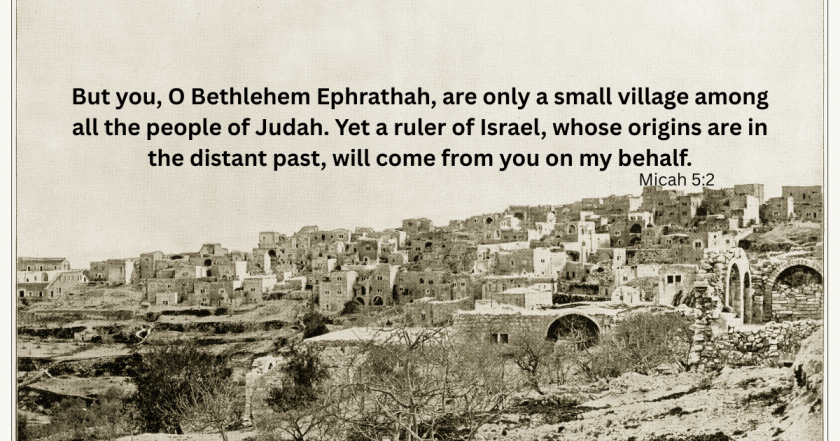
Pregnancy in the 21st century is far different than in the days when Mary was pregnant. Although the duration of a normal pregnancy remains nine months, there have been many advancements in modern medicine. Parents not only have the option of ultrasounds that reveal their baby’s gender, but also 3D imaging, which allows them to see what their baby will look like, and anatomy scans, which reveal the baby’s overall health and development. Then there’s the decision of where the baby will be born. In the days of Jesus, I suppose home births would have been the typical option, and while they remain an option, there are also hospitals and spa-like birthing centers to pick from. Along with these choices, there’s the how, including natural, medicated, and C-sections. Then there’s the when option, yes, some doctors allow you to pick the date of your child’s birth, working it around jobs or other life events that you may not want the birth to interfere with. In the days of Joseph and Mary, the option would have simply been a “home birth, which would have meant Galilee, where Joseph lived. However, in God’s sovereign plan, Caesar Augustus issued a decree requiring all to pay taxes. So, because Joseph was from the lineage of David, he and Mary (who was “great with child”) had to return to Bethlehem, the city of David, in order to be taxed. While they were there, Scripture records that “the days were accomplished that she should be delivered, (Luke 2:6). So, just as the prophet had declared, the long-awaited Messiah would be born in Bethlehem.

Reflection and Application

How has the Lord directed your steps before?

The More We Know

As with any government count, this census was meant to calculate taxes and military resources. Mary’s soon-to-be husband, Joseph, is a descendant of David, so they go to Bethlehem to participate (Luke 2:1–5).

It would have been unusual for an unmarried couple to travel together, but the circumstances of Mary’s pregnancy are hardly normal (Luke 1:34–35). The family likely realized it would be better for her to be with Joseph when she gave birth. That Mary is in Bethlehem when Jesus is born corresponds to Messianic prophecy (Micah 5:2). (gotquestions.org)

  1. She, delighting in the examples of the women of the Bible, volume 3, p36 ↩︎

Posted in Bible study, Devotion, From the Insideout, Journey Through The Word, Know These Truths, Quiet Time, She, Volume 3

Mary, The Mother of Jesus, part 2

Adapted from She, delighting in the women of the Bible, volume 3, pp 29-30

Today’s Scripture: Luke 1:26-38, Matthew 1:21, and Psalm 40:8

I delight to do Your will, O my God, And Your law is within my heart.”

Psalm 40:8

I love the details of Matthew 1:21, where the angel of the Lord appeared to Joseph in a dream after he had decided to break off the engagement and told him not to be afraid to marry her, explaining that the child she was carrying was conceived by the Holy Spirit.

To borrow a quote from the She study journal, p31, Mary carried the Savior of the world into this world for a specific purpose.” He would save His people from their sins.

An angel also visited and encouraged Mary, telling her she was highly favored and blessed among women; he assured her that the Lord was pleased with her. The angel’s words were not only about her, though; he also told her about the child, saying: “He shall be great, and shall be called the Son of the Highest and the Lord God shall give unto him the throne of his father David.” She learned that He would reign over the house of Jacob forever, and that his kingdom would never end. Wow! Talk about a good and encouraging ‘ultrasound’ report! (Luke 1:32-33)

Mary’s response was one of willingness, saying: “Behold the handmaid of the Lord; be it unto me according to thy word.” (Luke 1:38) In other words, “Thy will be done.” Whatever God had said or asked of her, she believed the angel’s message and surrendered to the Father’s will.

REFLECTION AND APPLICATION

What did it mean when Mary said: “…be it unto me according to thy word…”? Is this our attitude/answer to Him in life?

Posted in Bible study, Devotion, From the Insideout, Journey Through The Word, Know These Truths, Quiet Time, She, Volume 2, The Gospel

The True Harlot Mother

Adapted from She, Volume 2/p83-84

Read: 1 Kings 3

If you’ve heard the story, you already know the outcome; if you haven’t, then you may be surprised at the King’s first suggestion and the vastly different reactions of the women. Whether the story is new to you or well-known, we must be careful not to brush it aside as irrelevant to us today. Our circumstances and life choices may never place us in the exact scenario of the two mothers, but throughout our lifetime, we will inevitably face difficult choices – choices that make us choose right from wrong, good or evil, love or hate, gain or loss – and in all of these, we must choose carefully. Our decisions must be made with a heart yielded and committed to God’s glory (the righteous choice), even if it means suffering great loss. After all, Jesus told His disciples (including us): whoever wanted to follow Him would need to deny themselves daily and take up their cross, which, as explained by one commentary1, means to: “accept the rejection of the world for turning to Jesus and following him. Discipleship involves a death that is like a crucifixion (Gal. 2: 20 and 6:14).” This is why Jesus went on to say: “Whoever wants to save his life will lose it; but whoever loses his life because of me will save it” (Luke 9:24).

(1 Kings 3:24–25). 
Reflection and Application
  • Leave a comment below with another example of someone willing to suffer great loss for God’s glory.
The More We Know

The chapter’s final verse notes the effect that Solomon’s unorthodox methods had on the kingdom: “When all Israel heard the verdict the king had given, they held the king in awe, because they saw that he had wisdom from God to administer justice” (1 Kings 3:28). Solomon’s wisdom had been given by God when Solomon requested it (verse 5). The account of Solomon’s handling of the case of the two prostitutes showed that he had indeed been granted wisdom from God. ~ (Got questions.org)

Dear reader, if you do not know Jesus… if you have never professed your faith in Him, I invite you to explore “Know These Truths” where you will discover the Way to everlasting life and an indescribable joy. It is available to all who believe.

  1. Biblegateway.com sn Only Luke mentions taking up one’s cross daily. To bear the cross means to accept the rejection of the world for turning to Jesus and following him. Discipleship involves a death that is like a crucifixion; see Gal 6:14. ↩︎
Posted in Bible study, Devotion, From the Insideout, Journey Through The Word, She, Volume 2

Ruth, Part 4

Adapted from She, Volume 2/p69-72

Read: Ruth 3:1-20; Ruth 4; and Matthew 1:5

As someone who used to scheme and manipulate situations to get a desired result, the opening lines of Ruth chapter three catch my attention every time. Whether it was culturally acceptable to arrange marriages in that day and time, the conversation that ensues seems to fall under the plotting and scheming category of any generation or culture.

One day her mother-in-law Naomi said to Ruth, “My dear daughter, isn’t it about time I arranged a good home for you so you can have a happy life? And isn’t Boaz our close relative, the one with whose young women you’ve been working? Maybe it’s time to make our move. 

Ruth 3:1-2

It is worth noting that marriage arrangements were the custom of the day in which Naomi and Ruth lived. So, the argument could be made that they were simply following the lead or path that was opened when Boaz extended her the kindness, protection, and provision of gleaning in his field. As bibleref.com commentary explains, “Naomi has a problem. She wants Boaz, an older, highly honored Jewish man, to marry Ruth, her young Moabite daughter-in-law. Culturally, there is nothing about this scheme that makes sense. But Naomi knows Ruth deserves the best in life, and she’s resolved to make it happen. Naomi must balance several things all at once. She needs to figure out how Ruth can propose to Boaz while keeping safe and maintaining enough privacy that Boaz doesn’t lose face for talking with a foreign widow.”

Ruth Proposes

Ruth was a willing participant and followed all of the instructions Naomi gave her. After seeing/hearing all that Boaz had done thus far, there was no reason for either woman to doubt that Boaz, as a “near kinsman who could redeem them, would do what he could”2. Whether it is the man or woman who proposes, I think we would all agree that no one wants to hear the answer, ‘Yes, but…’. Unfortunately, however right he was, this is the answer that Boaz gives Ruth.

The Lord bless you, my daughter!’ Boaz exclaimed. ‘You are showing even more family loyalty now than you did before, for you have not gone after a younger man, whether rich or poor.3 Now don’t worry about a thing, my daughter. I will do what is necessary, for everyone in town knows you are a virtuous woman. But while it’s true that I am one of your family redeemers, there is another man who is more closely related to you than I am. 

Ruth 3:10-12

Despite her Moabite heritage, Ruth had come to be known as a kind and virtuous woman, and even though another man was a closer redeemer than Boaz, Boaz was the one whom God had prepared to be her redeemer.

12 But while it’s true that I am one of your family redeemers, there is another man who is more closely related to you than I am. 13 Stay here tonight, and in the morning I will talk to him. If he is willing to redeem you, very well. Let him marry you. But if he is not willing, then as surely as the Lord lives, I will redeem you myself! Now lie down here until morning.”

14 So Ruth lay at Boaz’s feet until the morning, but she got up before it was light enough for people to recognize each other. For Boaz had said, “No one must know that a woman was here at the threshing floor.” 15 Then Boaz said to her, “Bring your cloak and spread it out.” He measured six scoops[a] of barley into the cloak and placed it on her back. Then he[b] returned to the town.

16 When Ruth went back to her mother-in-law, Naomi asked, “What happened, my daughter?”

Ruth told Naomi everything Boaz had done for her, 17 and she added, “He gave me these six scoops of barley and said, ‘Don’t go back to your mother-in-law empty-handed.’”

18 Then Naomi said to her, “Just be patient, my daughter, until we hear what happens. The man won’t rest until he has settled things today.”

Ruth 3:12-18

While Naomi told Ruth she wouldn’t have to wait long, she also told her to “be patient.” Those two words can be very good advice, however they can also be a very annoying and often challenging statement. Yet, according to the commentary by Bibleref.com, just as Naomi had predicted, it is only a few hours later that Boaz goes to the city gates. Determined to do all he could to help care for Ruth and Naomi, Boaz follows the cultural demands of the day, which are described in the first twelve verses of Ruth, chapter four. They are a wonderful display of Boaz’s character, and I believe, his respect and heart’s desire to marry Ruth.

The Story of the Sandal

Boaz went to the town gate and took a seat there. Just then the family redeemer he had mentioned came by, so Boaz called out to him, “Come over here and sit down, friend. I want to talk to you.” So they sat down together. Then Boaz called ten leaders from the town and asked them to sit as witnesses. And Boaz said to the family redeemer, “You know Naomi, who came back from Moab. She is selling the land that belonged to our relative Elimelech. I thought I should speak to you about it so that you can redeem it if you wish. If you want the land, then buy it here in the presence of these witnesses. But if you don’t want it, let me know right away, because I am next in line to redeem it after you.”

The man replied, “All right, I’ll redeem it.”

Then Boaz told him, “Of course, your purchase of the land from Naomi also requires that you marry Ruth, the Moabite widow. That way she can have children who will carry on her husband’s name and keep the land in the family.”

“Then I can’t redeem it,” the family redeemer replied, “because this might endanger my own estate. You redeem the land; I cannot do it.”

Now in those days it was the custom in Israel for anyone transferring a right of purchase to remove his sandal and hand it to the other party. This publicly validated the transaction. So the other family redeemer drew off his sandal as he said to Boaz, “You buy the land.”

Then Boaz said to the elders and to the crowd standing around, “You are witnesses that today I have bought from Naomi all the property of Elimelech, Kilion, and Mahlon. 10 And with the land I have acquired Ruth, the Moabite widow of Mahlon, to be my wife. This way she can have a son to carry on the family name of her dead husband and to inherit the family property here in his hometown. You are all witnesses today.”

11 Then the elders and all the people standing in the gate replied, “We are witnesses! May the Lord make this woman who is coming into your home like Rachel and Leah, from whom all the nation of Israel descended! May you prosper in Ephrathah and be famous in Bethlehem. 12 And may the Lord give you descendants by this young woman who will be like those of our ancestor Perez, the son of Tamar and Judah.” Ruth 4:1-12

Then Boaz said to the elders and to the crowd standing around, “You are witnesses that today I have bought from Naomi all the property of Elimelech, Kilion, and Mahlon. 10 And with the land I have acquired Ruth, the Moabite widow of Mahlon, to be my wife. This way she can have a son to carry on the family name of her dead husband and to inherit the family property here in his hometown. You are all witnesses today.”

Ruth 4:9-10

Scripture paints a beautiful picture of the story, allowing us to see the amazingly personal hand of God carrying out His purposes and plans for generations upon generations to come.

So Boaz took Ruth into his home, and she became his wife. When he slept with her, the Lord enabled her to become pregnant, and she gave birth to a son. (Ruth 4:13) – Cue the water works and celebration, for Naomi (and Ruth) have been redeemed and restored!

Then the women of the town said to Naomi, “Praise the Lord, who has now provided a redeemer for your family! May this child be famous in Israel. 15 May he restore your youth and care for you in your old age. For he is the son of your daughter-in-law who loves you and has been better to you than seven sons!”

Ruth 4:14-15

As the study journal points out, Ruth’s son would be the grandfather of King David of Israel. And fourteen generations after him, Jesus Christ would be born of the same lineage. ~ for even more details on the beautiful plan of God in and through the story of Ruth and the glorious arrival of Jesus, “in whom we have redemption through His blood, the forgiveness of sins, according to the riches of His grace5“, click here.

Reflection and Application
  • Why do we need a Redeemer?
  • What was the name of Ruth and Boaz’s son, and how does he play a part in the life of Jesus, our Redeemer?
The More We Know

Would you like to know more about Jesus, My Redeemer?

Posted in Bible study, Devotion, From the Beginning to Forever, From the Insideout, Journey Through The Word, LGG Study

The Rescuer – in the Flesh

Based on the Love God Greatly Study, From the Beginning to Forever/w5d1

Read: Luke 1:1-21 and John 1:1-4, & 14/SOAP: John 1:14

In the beginning the Word already existed.
    The Word was with God,
    and the Word was God.
He existed in the beginning with God.
God created everything through him,
    and nothing was created except through him.
The Word gave life to everything that was created,
    and his life brought light to everyone.

14 So the Word became human and made his home among us. He was full of unfailing love and faithfulness. And we have seen his glory, the glory of the Father’s one and only Son.

John 1:1-4, &14

In today’s journey, we see the long-awaited promise of God to send a Savior, a rescuer for His people, has come! The One who became flesh and made His home among us…The One who will crush the head of the serpent, as God proclaimed in the Garden…the One who will do for us what God did for Noah in the days of the flood…The One who God proclaimed would come from the descendants of Abraham, Isaac, and Jacob…The One who will be the sacrificial lamb, whose blood will cover our sins so that through faith we can be forgiven and have a new life…The One who will fulfill the law for us so we will know God’s mercy and grace and not His condemnation…The One who will endure our punishment on the cross…The One who will be our King…The One Who will sit on the throne of David forever and ever…The One who will give us hope and a right relationship with God…The One who will lead us out of captivity into His glorious light…

My mother always told me, “Be careful what you wish (ask) for, MaryEllen.” Today’s passage of our journey seems a wonderful reminder of why she said/repeated that to me through the years. Sometimes we think we know what is best or what would be better for us … yet, when and if we get “it”, we discover it was not what we thought it would be. Instead, we often find that “it” actually made things worse. As today’s journal entry points out, such was true with the people of God in the Old Testament: “After the exiles returned to the land of Israel, there was much hope that things would be different. Unfortunately, the people didn’t want to listen to God, so He gave them what they wanted. God didn’t speak to His people for 400 years, but He was still at work.” The truth that He was still at work throughout the 400 years is made evident in the opening words of the New Testament, where we learn that the “Rescuer,” the seed of Abraham, had come in the flesh. The promised Redeemer had come. Yet, He did not come as the people expected. He came not as a ruling, reigning King who would overthrow the world; instead, He came as an infant to an obscure town – to a virgin Mary, who wrapped Him in swaddling cloths and laid him in a manger.

“This is a record1 of the ancestors of Jesus the Messiah, a descendant of David and of Abraham. …Jacob was the father of Joseph, the husband of Mary. Mary gave birth to Jesus, who is called the Messiah.”

Matthew 1:1 and 17

While Matthew records the genealogy of Jesus and Luke gives the story of His birth, John captivates me with his description that Jesus…the Word became flesh and took up residence among us-the glory of the one and only, full of grace and truth, who came from the Father.” The Word, who was with God in the beginning,2 the One who Scripture declares to be from the “line of David,”3 from the family of Abraham, Isaac, and Jacob, had come in the flesh, from the Father4, just as God had promised.

The More We Know

For more insight into today’s journey, read today’s LGG blog post